“If AI increasingly performs the work through which people once learned, what role will the workplace play in how people develop?”
As AI changes how work gets done, the workplace can help ensure people continue to develop alongside it. The next chapter of workplace strategy may be defined less by how many people come into the office or how often they are there, and more by whether the workplace creates the conditions people need to perform, learn, adapt, connect, and remain effective as the nature of the work itself changes.
In this report, we explore what workplace leaders say matters today and what those signals, alongside evolving macro and micro drivers, could tell us about how the workplace should evolve over the next 3 to 5 years.
完整报告可在本页底部下载。 现在就带我去那里!
The People Shaping Workplace Decisions – Respondent Audience Defined
This research reflects the perspectives of 150 professionals responsible for evaluating workplace and employee experience needs within large organizations. Rather than representing the employee perspective directly, respondents bring experience across people, workplace strategy, operations, technology, real estate, and business leadership.
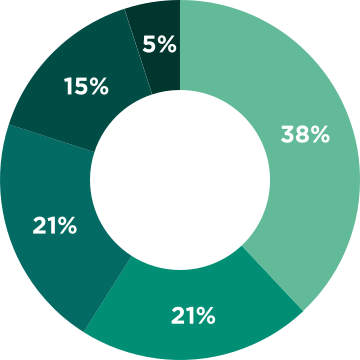
⬤ 38%, Professional, financial, technology, or business services
⬤ 21%, Healthcare, life sciences, education, or public sector
⬤ 21%, Retail, consumer products, hospitality, media, or entertainment
⬤ 15%, Manufacturing, industrial, energy, transportation, or logistics
⬤ 5%, Other
What We Learned / Confirmed
Our findings point to several shifts in how workplace leaders are evaluating the employee experience today and where they see opportunities to better support people as work continues to evolve:
The Workplace Still Has to Get the Basics Right
MORE THAN 2 IN 3 workplace leaders who identified measurable value from recent workplace investments point to outcomes including improved focus, collaboration, time saved, and fewer workplace issues.
⤷ WHY IT MATTERS: The future workplace still depends on getting the fundamentals right. Environments that help people work effectively provide the foundation for what comes next.
Different Work Requires Different Conditions
超过一半 of workplace leaders see greater value in environments that can adapt to changing demands, with flexible and multipurpose spaces emerging as a priority as organizations consider how the workplace should evolve.
⤷ WHY IT MATTERS: Different types of work require different environments throughout the day. Flexible spaces and greater choice across settings allow the workplace to respond as work shifts throughout the day.
Learning May Depend More on People Than Programming
Among workplace leaders identifying gaps in learning and community, NEARLY HALF say mentoring and coaching would make the greatest difference, significantly outpacing structured training and employee events.
⤷ WHY IT MATTERS: As AI takes on more tasks, organizations will need to be more intentional about how people continue to learn and develop. The workplace can create opportunities for coaching, observation, knowledge sharing, and learning from others.
Recovery Is Becoming Part of Supporting Performance
Among workplace leaders identifying gaps in wellbeing and personal resources, MORE THAN 7 IN 10 say rest and basic recovery spaces would make the greatest difference, more than 4倍 the response for nursing and personal care rooms.
⤷ WHY IT MATTERS: Sustaining performance is not only about giving people places to do more. As work becomes more cognitively demanding, opportunities to step away, reset, and return effectively become increasingly important.
Technology Creates More Value When It Works Around People
超过一半 of workplace leaders say smart environments that automatically adjust lighting, temperature, sound, or room setup could add value over the next 3 to 5 years. Among those seeing value, MORE THAN 7 IN 10 say their organizations are already exploring, testing, or expanding them.
⤷ WHY IT MATTERS: As AI and other technologies become more embedded in work, the opportunity is not simply to add more technology. It is to reduce friction and create environments that better respond to people.
想了解更多?下载完整报告!

 English
 简体中文