Research & Insights – June 2026

How Consumers are Redefining Their Relationship with Luxury Beyond the Product Itself

“If craftsmanship remains the foundation of luxury, what now shapes consumer expectations beyond the product itself?”

The luxury industry is not being redefined, but the ways consumers experience and evaluate it are evolving. Craftsmanship still anchors the category, but how consumers engage with brands, where they encounter them, and what they expect from those interactions is shifting. All forms of retail remain relevant, from pop-ups to permanent spaces, from standalone brand experiences to department stores, but they are increasingly evaluated as part of a larger ecosystem.

What matters is not simply where brands show up, but how each environment contributes to the broader relationship consumers have with the brand over time. Hospitality, wellness, after-care, and personalized service have become more integrated parts of the luxury experience. They are shaping how consumers evaluate the luxury experience before, during, and long after the purchase itself.

Consumers still associate luxury with quality, rarity, and long-term value, but they are also placing greater importance on environments that feel intentional, service that is attentive, and experiences that create stronger emotional resonance and sustained engagement over time.

In this report, we explore how physical spaces are adapting to changing expectations around connection, service, participation, and what is shaping long-term brand affinity, while continuing to reinforce the craftsmanship and quality that remain foundational to the luxury industry.

完整报告可在本页底部下载。 现在就带我去那里!

我们学到了什么

Based on our findings, luxury consumers shared the following key insights on how they engage with and perceive luxury brand environments, including what draws them in, what diminishes the experience, and where they see the industry heading:

Craftsmanship Still Leads, But Expression Is Evolving

62% of respondents say quality and craftsmanship is the top reason they buy luxury today. However, younger consumers place significantly more weight on what a brand represents and how it fits into their lifestyle, reinforcing a shift from product alone to product plus meaning and expression.

Ownership Anchors Luxury, But Relationships Drive Value

More than 3 in 4 respondents associate luxury with owning something rare or of status. At the same time, nearly half express interest in private, members-only environments, showing that while ownership remains foundational, value is shaped by the experiences and relationships built around it.

Calm, Clarity, and Flow Define the Environment

50% of luxury consumers identify a quiet atmosphere as a defining characteristic of a premium experience. Consumers are also prioritizing environments that feel intuitive, well-paced, and easy to navigate, showing that flow and functionality shape perceptions of luxury just as much as aesthetics.

Extended Brand Environments Are Driving Engagement

More than 90% of consumers are already engaging with luxury beyond the product itself, whether through interest in hospitality and travel experiences or through visits to luxury branded hotels and restaurants. These environments are becoming central to how consumers engage with brands over time.

Service and Care Build Trust Over Time

Close to half of respondents say after-care services protect the value of what they purchase and build trust in quality. Increasingly, consumers expect that level of care to extend across the full experience, reinforcing the importance of service, continuity, and long-term support.

Consumer Personas Defined

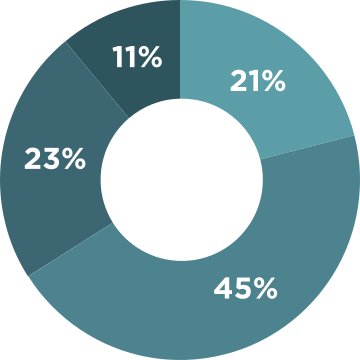
21%, The Heritage Collectors

These consumers are grounded in quality and consistency. They care about how something is made, how long it will last, and whether the brand delivers on what it promises. They are less driven by what is new and more focused on what holds up over time.

45%, The Aspirational Achievers

This group is building their relationship with luxury. They are motivated by progress and self-expression, and they are open to different ways of engaging, whether through product, experience, or brand storytelling.

23%, The Status Seekers

These consumers are motivated by visibility and recognition. They are drawn to brands and environments that clearly communicate status, whether through product, service, or the overall setting.

11%, The Cared For

These consumers place the highest value on how a brand takes care of them. They are drawn to experiences that feel attentive, consistent, and personal over time. What matters is not just the product, but the level of service, follow-up, and support that surrounds it.

Luxury is not moving away from craftsmanship or quality, but the ways consumers experience and validate those qualities are evolving. Across hospitality, wellness, service, after-care, loyalty, and immersive experiences, consumers are placing greater value on how brands make them feel over time, not simply what they purchase in a single moment.

Heritage Collectors value restraint, longevity, and enduring quality. Status Seekers prioritize visibility, access, and cultural relevance. Aspirational Achievers gravitate toward immersion, lifestyle participation, and more accessible entry points into the brand, while Cared For consumers place greater importance on attentiveness, emotional ease, and supportive experiences.

At the same time, many expectations remain consistent. Calm, privacy, atmosphere, personalization, and thoughtful service continue to shape how luxury is experienced. The opportunity for successful expansion and evolution is how those expectations are expressed across environments, services, and forms of engagement.

Physical spaces are relationship infrastructure, supporting everything from access to care across multiple touchpoints. The strongest luxury brands are not simply offering more experiences, but creating systems that feel cohesive, intentional, and clear in what the brand stands for.

As brands expand into new formats and services, the opportunity is not simply to extend further, but to understand which forms of value matter most to different consumers and how physical space can support longer-term emotional connection over time.

想了解更多?下载完整报告!