Research & Insights – October 2026

The Workplace Has a New Job – Positioning AI Change Into Human Potential

“If AI increasingly performs the work through which people once learned, what role will the workplace play in how people develop?”

As AI changes how work gets done, the workplace can help ensure people continue to develop alongside it. The next chapter of workplace strategy may be defined less by how many people come into the office or how often they are there, and more by whether the workplace creates the conditions people need to perform, learn, adapt, connect, and remain effective as the nature of the work itself changes.

In this report, we explore what workplace leaders say matters today and what those signals, alongside evolving macro and micro drivers, could tell us about how the workplace should evolve over the next 3 to 5 years.

The full report is available for download at the bottom of this page. Take me there now!

The People Shaping Workplace Decisions – Respondent Audience Defined

This research reflects the perspectives of 150 professionals responsible for evaluating workplace and employee experience needs within large organizations. Rather than representing the employee perspective directly, respondents bring experience across people, workplace strategy, operations, technology, real estate, and business leadership.
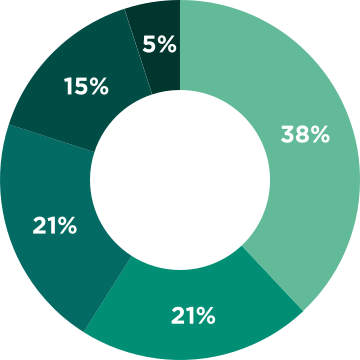
⬤ 38%, Professional, financial, technology, or business services

⬤ 21%, Healthcare, life sciences, education, or public sector

⬤ 21%, Retail, consumer products, hospitality, media, or entertainment

⬤ 15%, Manufacturing, industrial, energy, transportation, or logistics

⬤ 5%, Other

What We Learned / Confirmed

Our findings point to several shifts in how workplace leaders are evaluating the employee experience today and where they see opportunities to better support people as work continues to evolve:

The Workplace Still Has to Get the Basics Right

MORE THAN 2 IN 3 workplace leaders who identified measurable value from recent workplace investments point to outcomes including improved focus, collaboration, time saved, and fewer workplace issues.

⤷ WHY IT MATTERS: The future workplace still depends on getting the fundamentals right. Environments that help people work effectively provide the foundation for what comes next.

Different Work Requires Different Conditions

MORE THAN HALF of workplace leaders see greater value in environments that can adapt to changing demands, with flexible and multipurpose spaces emerging as a priority as organizations consider how the workplace should evolve.

⤷ WHY IT MATTERS: Different types of work require different environments throughout the day. Flexible spaces and greater choice across settings allow the workplace to respond as work shifts throughout the day.

Learning May Depend More on People Than Programming

Among workplace leaders identifying gaps in learning and community, NEARLY HALF say mentoring and coaching would make the greatest difference, significantly outpacing structured training and employee events.

⤷ WHY IT MATTERS: As AI takes on more tasks, organizations will need to be more intentional about how people continue to learn and develop. The workplace can create opportunities for coaching, observation, knowledge sharing, and learning from others.

Recovery Is Becoming Part of Supporting Performance

Among workplace leaders identifying gaps in wellbeing and personal resources, MORE THAN 7 IN 10 say rest and basic recovery spaces would make the greatest difference, more than 4X the response for nursing and personal care rooms.

⤷ WHY IT MATTERS: Sustaining performance is not only about giving people places to do more. As work becomes more cognitively demanding, opportunities to step away, reset, and return effectively become increasingly important.

Technology Creates More Value When It Works Around People

MORE THAN HALF of workplace leaders say smart environments that automatically adjust lighting, temperature, sound, or room setup could add value over the next 3 to 5 years. Among those seeing value, MORE THAN 7 IN 10 say their organizations are already exploring, testing, or expanding them.

⤷ WHY IT MATTERS: As AI and other technologies become more embedded in work, the opportunity is not simply to add more technology. It is to reduce friction and create environments that better respond to people.

Interested in More? Download the Full Report!


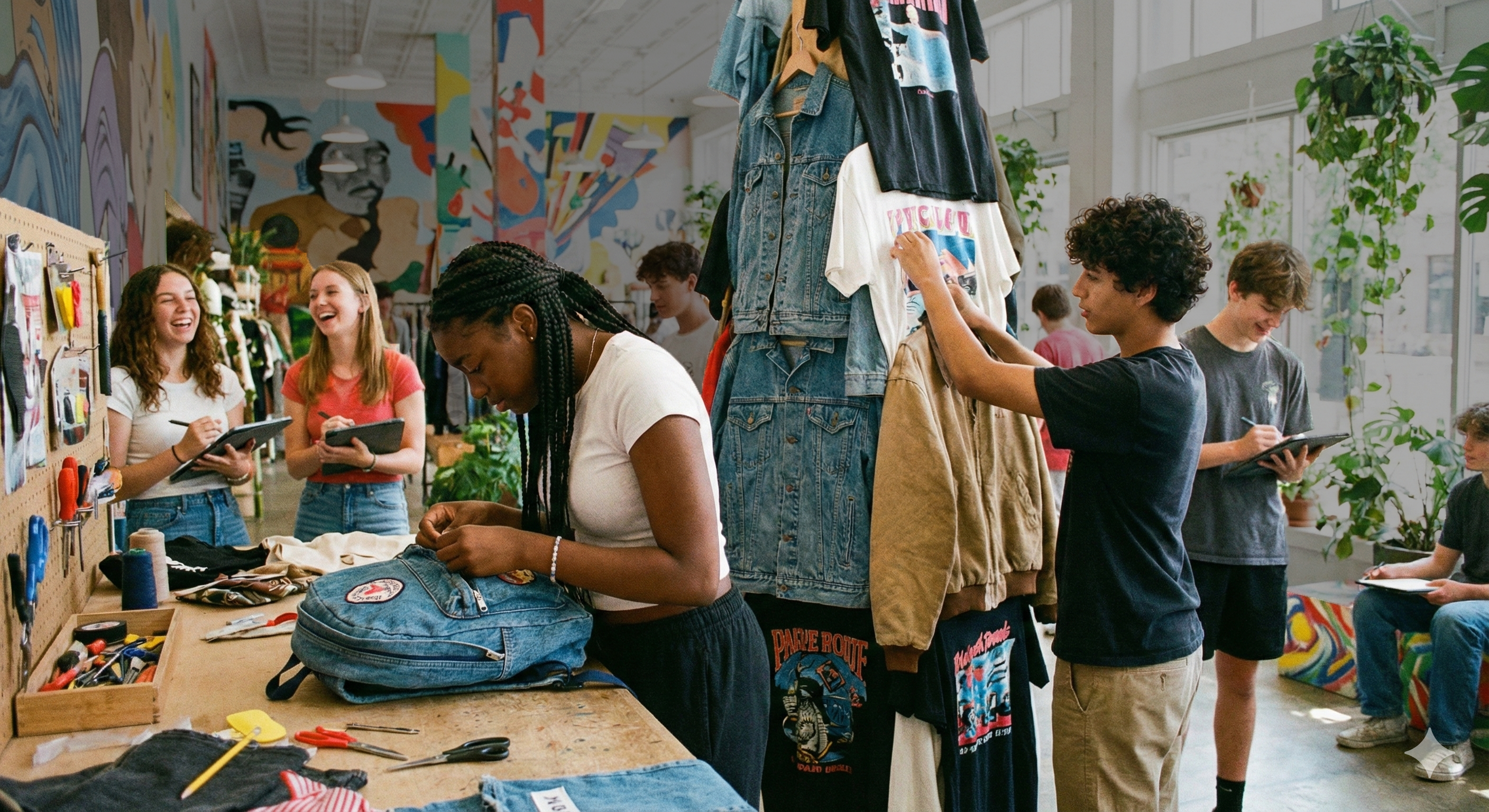
Gen Alpha Wants a Say in Retail

In a recent Fast Company article, MG2 Principal Melissa Gonzalez explores Gen Alpha’s expectations for how they engage with brands and the role physical stores can play in creating more interactive experiences.

“In our research, 73% of Gen Alpha said seeing, trying, or touching things themselves was a leading reason to visit a physical store. We also saw stronger interest in hands-on engagement that allowed them to evaluate, test, and explore products rather than simply encounter something visually impressive.”

Brand Leaders in the Middle of an AI Culture War

Alicia Esposito discusses how Gen Z is seeking community and connection through physical retail experiences in a recent Future Commerce article.

“Three in five Gen Z shoppers visit stores to experience a brand’s community, according to MG2 Advisory research. Research has shown these behaviors are even starting to trickle down to Gen Alpha.”

2026 Designers Dish!

In a recent Restaurant Development + Design article by Amanda Baltazar, MG2 Project Manager Joy Dayaw shared insights on the state of restaurant design.

Why Luxury’s New Status Symbol Goes Beyond the Product

In a recent Inside Retail article, MG2 Principal Melissa Gonzalez explores how luxury is evolving beyond the product and how consumers are placing greater value on experiences and relationships with brands.

“One of the clearest findings from MG2 Advisory’s research is that consumers already engage with luxury well beyond traditional retail environments. More than 90 per cent of respondents expressed interest in luxury experiences outside the product itself, including hospitality, travel, dining, wellness and cultural destinations.”

The Mall of the Future, Driven by the Teens of Today

In a recent Building Design + Construction article, Managing Editor Quinn Purcell explores the influence of teenagers on shopping malls, siting insights from MG2 Advisory’s Gen Alpha report, and talks with MG2 Principals Melissa Gonzalez and David Russell.

“According to a December 2025 report by global architecture and design firm MG2, Young in Age, Mighty in Impact: Gen Alpha is Rewriting The Rules For Brands, 73% of Gen Alpha consumers prefer shopping in-store. They find value in the tactile, hands-on experiences that let them explore products, validate their purchase decisions, and engage with brands.”

Movie Theaters Are Drawing Crowds Again, and Gen Z Is Part of the Comeback

In a recent ICSC C+CT article with Joel Groover, MG2 Principal Melissa Gonzalez explores how thoughtful design and marketing strategies can make moviegoing more compelling to Gen Z and Gen Alpha.

“As Gonzalez sees it, younger generations prize tactile, immersive experiences that are powerful enough to pull them away from their usual distractions. They value the social dimension of shopping and moviegoing, she added, and often want to co-create and be part of the experience rather than just passively observe it.”

Melissa Gonzalez Announced as Retail Expansion Summit & Expo Speaker

MG2 Principal Melissa Gonzalez will deliver a keynote at the Retail Expansion Summit & Expo on October 15 in Mexico City, exploring how thoughtful retail design transforms stores into destinations.

Drawing on her experience pioneering experiential and pop-up retail, Melissa will share why physical spaces matter more than ever in an era where convenience happens online. Her session will explore how immersive design and storytelling help brands capture attention, encourage longer visits, and build lasting customer loyalty.

Melissa Gonzalez Announced as Glossy Wellness Awards Judge

Just announced! MG2 Principal Melissa Gonzalez is going to be a Glossy Wellness Awards judge among a cohort of industry experts. The Awards recognize the companies transforming the wellness industry through campaigns, initiatives, products, practices and innovations focused on living well and longevity.

Melissa Gonzalez Announced as NRF ’27 Speaker

The speaker lineup for NRF 2027: Retail’s Big Show has been announced, and MG2 Principal Melissa Gonzalez will be joining the conversation in New York City this January. NRF’s Big Show brings together thousands of retail leaders, innovators, and changemakers from across the industry to explore what’s next for retail, we hope to see you there.

Love at First Sight

In a recent article for Restaurant Development + Design, Amanda Baltazar spoke with MG2 Principal Bill Sleeth about creating the perfect first impression for restaurant guests.

“Bars can be very warm and inviting, points out MG2’s Sleeth, and can offer and intimate experience. They can also be a center point to a restaurant that everything revolves around and can even sometimes be a shield between the front door and the dining room, blocking noise, cold air and the hubbub of guests arriving.”

Perspectives

MG2 Publishes Sustainability Impact Report

June 2026 / By Johnny Klemke

Transparent carbon management is key to advancing sustainable operations.

SEATTLE, WA—June 17, 2026—Global architecture and design firm MG2, an affiliate of Colliers Engineering & Design, has published its 2025 Sustainability Impact Report. The report highlights the firm’s commitment to building performance and includes a case study on the decarbonization of big-box retail warehouses, looking specifically at how low-carbon concrete and masonry in Costco Wholesale facilities can have a positive impact on the environment.

“Building performance is not a feature we add at the end of a project,” says MG2 President Russ Hazzard, AIA. “It is a framework that informs every decision from concept through completion. At MG2, we approach design as a dynamic system, where architecture, operations, and occupant experience intersect.”

MG2’s report showcases the firm’s commitment to advancing performance, reducing carbon impact, and safeguarding the well-being of communities and ecosystems connected to the built environment.

“We can only improve what we measure,” says MG2’s Senior Building Performance Analyst Johnny Klemke, LEED AP BD+C. “That’s why MG2 tracks our corporate emissions and encourages teams to elevate performance data across our projects. This report marks real progress, and it also sets the stage for what comes next: turning insight into action and driving measurable improvements in the years ahead.”

MG2 is a proud signatory of both the AIA 2030 Commitment as well as the AIA Materials Pledge and integrates sustainability into every aspect of its work.

Research & Insights – June 2026

How Consumers are Redefining Their Relationship with Luxury Beyond the Product Itself

“If craftsmanship remains the foundation of luxury, what now shapes consumer expectations beyond the product itself?”

The luxury industry is not being redefined, but the ways consumers experience and evaluate it are evolving. Craftsmanship still anchors the category, but how consumers engage with brands, where they encounter them, and what they expect from those interactions is shifting. All forms of retail remain relevant, from pop-ups to permanent spaces, from standalone brand experiences to department stores, but they are increasingly evaluated as part of a larger ecosystem.

What matters is not simply where brands show up, but how each environment contributes to the broader relationship consumers have with the brand over time. Hospitality, wellness, after-care, and personalized service have become more integrated parts of the luxury experience. They are shaping how consumers evaluate the luxury experience before, during, and long after the purchase itself.

Consumers still associate luxury with quality, rarity, and long-term value, but they are also placing greater importance on environments that feel intentional, service that is attentive, and experiences that create stronger emotional resonance and sustained engagement over time.

In this report, we explore how physical spaces are adapting to changing expectations around connection, service, participation, and what is shaping long-term brand affinity, while continuing to reinforce the craftsmanship and quality that remain foundational to the luxury industry.

The full report is available for download at the bottom of this page. Take me there now!

What We Learned

Based on our findings, luxury consumers shared the following key insights on how they engage with and perceive luxury brand environments, including what draws them in, what diminishes the experience, and where they see the industry heading:

Craftsmanship Still Leads, But Expression Is Evolving

62% of respondents say quality and craftsmanship is the top reason they buy luxury today. However, younger consumers place significantly more weight on what a brand represents and how it fits into their lifestyle, reinforcing a shift from product alone to product plus meaning and expression.

Ownership Anchors Luxury, But Relationships Drive Value

More than 3 in 4 respondents associate luxury with owning something rare or of status. At the same time, nearly half express interest in private, members-only environments, showing that while ownership remains foundational, value is shaped by the experiences and relationships built around it.

Calm, Clarity, and Flow Define the Environment

50% of luxury consumers identify a quiet atmosphere as a defining characteristic of a premium experience. Consumers are also prioritizing environments that feel intuitive, well-paced, and easy to navigate, showing that flow and functionality shape perceptions of luxury just as much as aesthetics.

Extended Brand Environments Are Driving Engagement

More than 90% of consumers are already engaging with luxury beyond the product itself, whether through interest in hospitality and travel experiences or through visits to luxury branded hotels and restaurants. These environments are becoming central to how consumers engage with brands over time.

Service and Care Build Trust Over Time

Close to half of respondents say after-care services protect the value of what they purchase and build trust in quality. Increasingly, consumers expect that level of care to extend across the full experience, reinforcing the importance of service, continuity, and long-term support.

Consumer Personas Defined

21%, The Heritage Collectors

These consumers are grounded in quality and consistency. They care about how something is made, how long it will last, and whether the brand delivers on what it promises. They are less driven by what is new and more focused on what holds up over time.

45%, The Aspirational Achievers

This group is building their relationship with luxury. They are motivated by progress and self-expression, and they are open to different ways of engaging, whether through product, experience, or brand storytelling.

23%, The Status Seekers

These consumers are motivated by visibility and recognition. They are drawn to brands and environments that clearly communicate status, whether through product, service, or the overall setting.

11%, The Cared For

These consumers place the highest value on how a brand takes care of them. They are drawn to experiences that feel attentive, consistent, and personal over time. What matters is not just the product, but the level of service, follow-up, and support that surrounds it.

Luxury is not moving away from craftsmanship or quality, but the ways consumers experience and validate those qualities are evolving. Across hospitality, wellness, service, after-care, loyalty, and immersive experiences, consumers are placing greater value on how brands make them feel over time, not simply what they purchase in a single moment.

Heritage Collectors value restraint, longevity, and enduring quality. Status Seekers prioritize visibility, access, and cultural relevance. Aspirational Achievers gravitate toward immersion, lifestyle participation, and more accessible entry points into the brand, while Cared For consumers place greater importance on attentiveness, emotional ease, and supportive experiences.

At the same time, many expectations remain consistent. Calm, privacy, atmosphere, personalization, and thoughtful service continue to shape how luxury is experienced. The opportunity for successful expansion and evolution is how those expectations are expressed across environments, services, and forms of engagement.

Physical spaces are relationship infrastructure, supporting everything from access to care across multiple touchpoints. The strongest luxury brands are not simply offering more experiences, but creating systems that feel cohesive, intentional, and clear in what the brand stands for.

As brands expand into new formats and services, the opportunity is not simply to extend further, but to understand which forms of value matter most to different consumers and how physical space can support longer-term emotional connection over time.

Interested in More? Download the Full Report!

Food Fight: Grocery Competitors and Rivals Gear Up

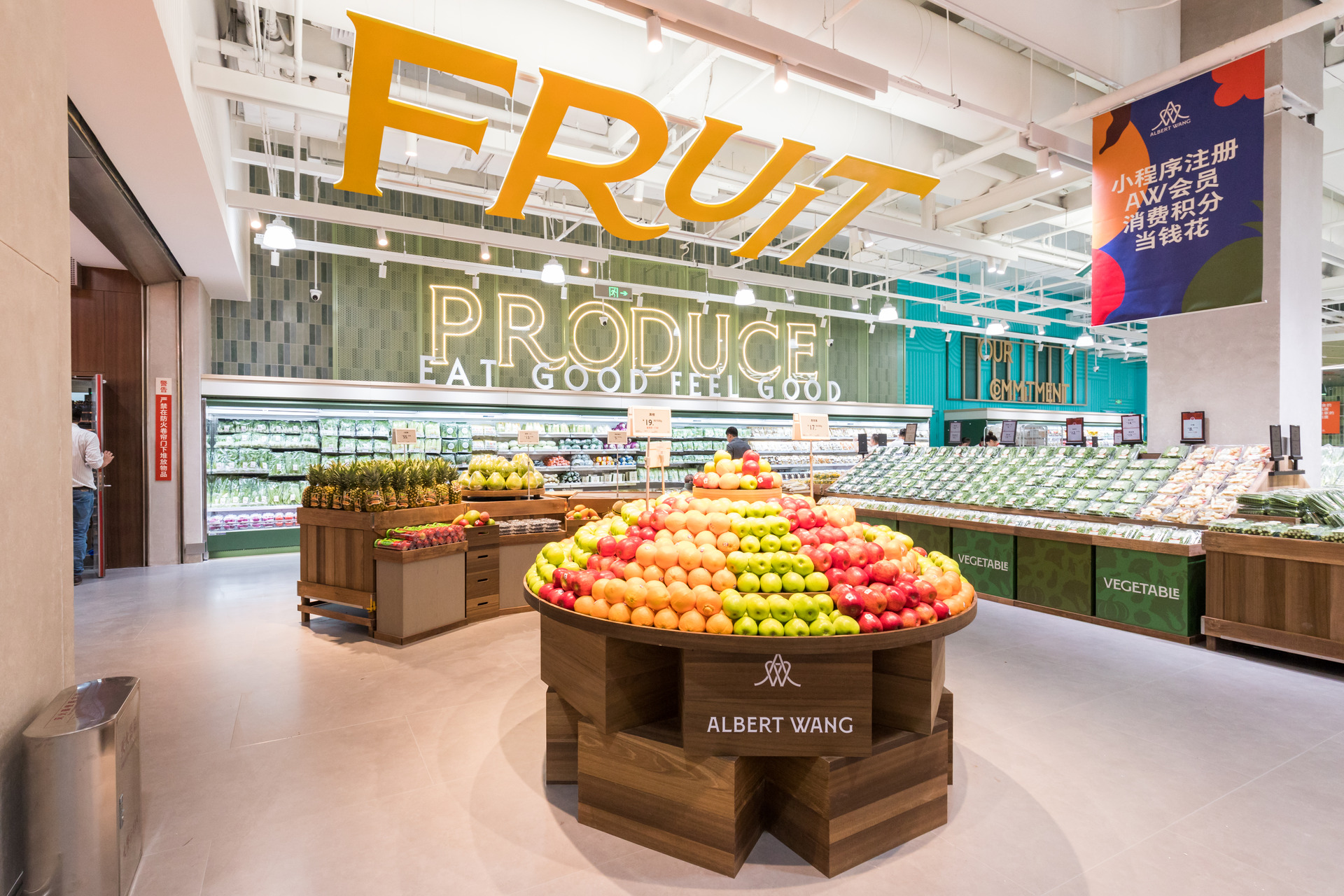
In a recent VMSD article, Janet Groeber highlights MG2’s design of Albert Wang Market in Beijing and features insights from MG2 Principal Jooyeol Oh on creating a premium grocery experience.

“’There’s a middle class they wanted to address and then create a store to cater to that kind of a clientele.’ The target customer is a food lover who can watch baked goods, meats and fresh fish, being prepared on site – a sort of culinary theater meets shopping experience that builds confidence in product quality.”

Perspectives – May 2026

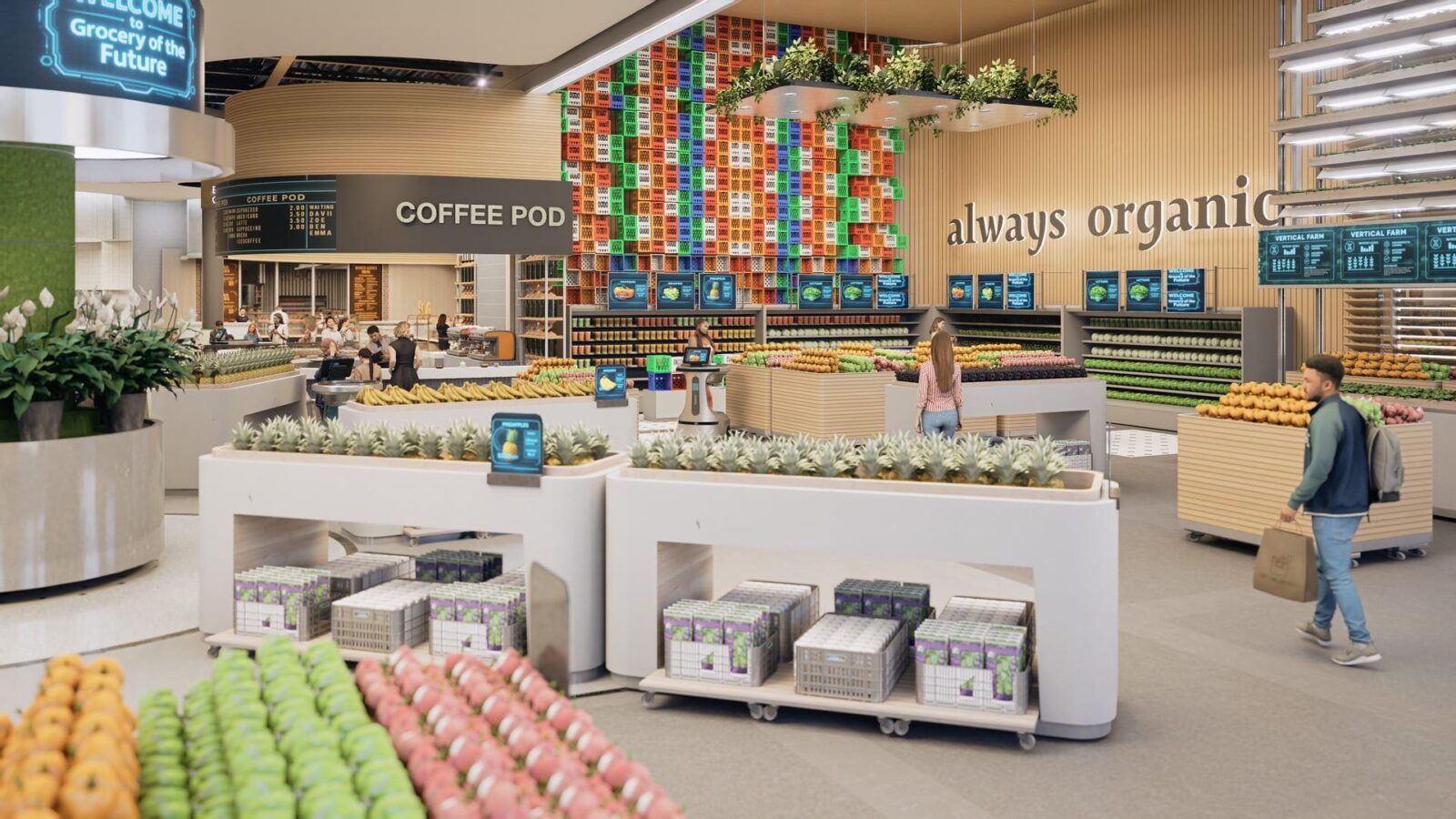
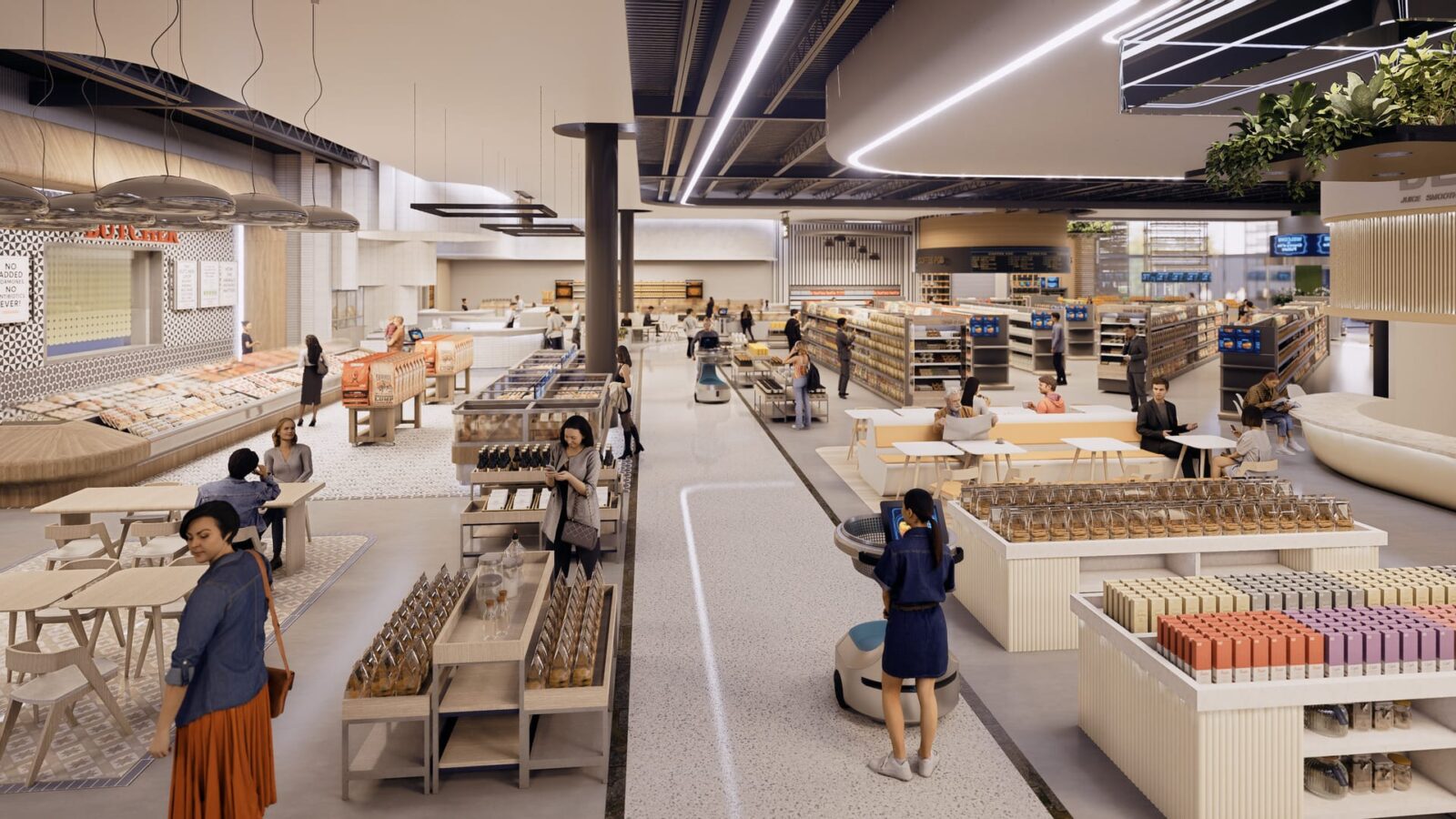
Envisioning the Next Evolution of the Grocery Store Experience

Our future-thinking grocery experience is grounded in what is true today—and brought to life through a lens of what is possible.

Developed through a collaboration between our Advisory and design teams, the concept turns behavioral insights into a complete customer journey, from arrival to checkout. It supports both quick, efficiency-driven trips and more exploratory visits, with intuitive layouts, flexible zoning, and a central “town square” focused on transparent, prepared food experiences. Designed to reflect and adapt to the local community, it blends placemaking, technology, and human interaction to create a grocery environment that is both functional and engaging.

Arrival is intuitive, flow is simplified, and community is integrated. Freshness is at the forefront, with high-tech vertical farming in action. Movement becomes frictionless, navigation is clear, and messaging is personalized. A market that reflects the community it sits in anchors the experience. Convenience is facilitated without compromising quality, while robots ensure efficiency, and chefs create the craft. The last moment is as impressionable as the first – engaged in community, powered by frictionless automation.

If you’re attending ICSC Las Vegas next week, connect with our team alongside Colliers and Colliers Engineering & Design at Booth 4009Q in the South Hall Upper to experience our VR grocery store model for yourself.

Want to learn more about our Grocery of the Future concept? Sign up below and we’ll get in touch!


Consumer Check-In: What Shoppers Really Think About Sustainability

In an article for Women’s Wear Daily, Andre Claudio explored what sustainability means to today’s shoppers, including perspectives from MG2 Principal Melissa Gonzalez on evolving consumer expectations.

“’Gen Z and millennials think about sustainability more broadly than previous generations, looking beyond recycled materials or eco-friendly products to consider how things are made and the overall impact of the retail experience,’ Melissa Gonzalez, retail strategist and principal at MG2, told Sourcing Journal. ‘For them, sustainability extends into store design, operations and the brand footprint, driving expectations for visible and meaningful commitments across every part of the shopping environment.'”

The State of Stores

In a recent Retail Brew article, MG2 Principal Melissa Gonzalez shares insights on the in-store experience.

“‘When it comes to both Gen Z and Gen Alpha, “they want community, they want engagement, they want tactile,’ Melissa Gonzalez, principal at MG2 Design with a focus on store design, told Retail Brew.”

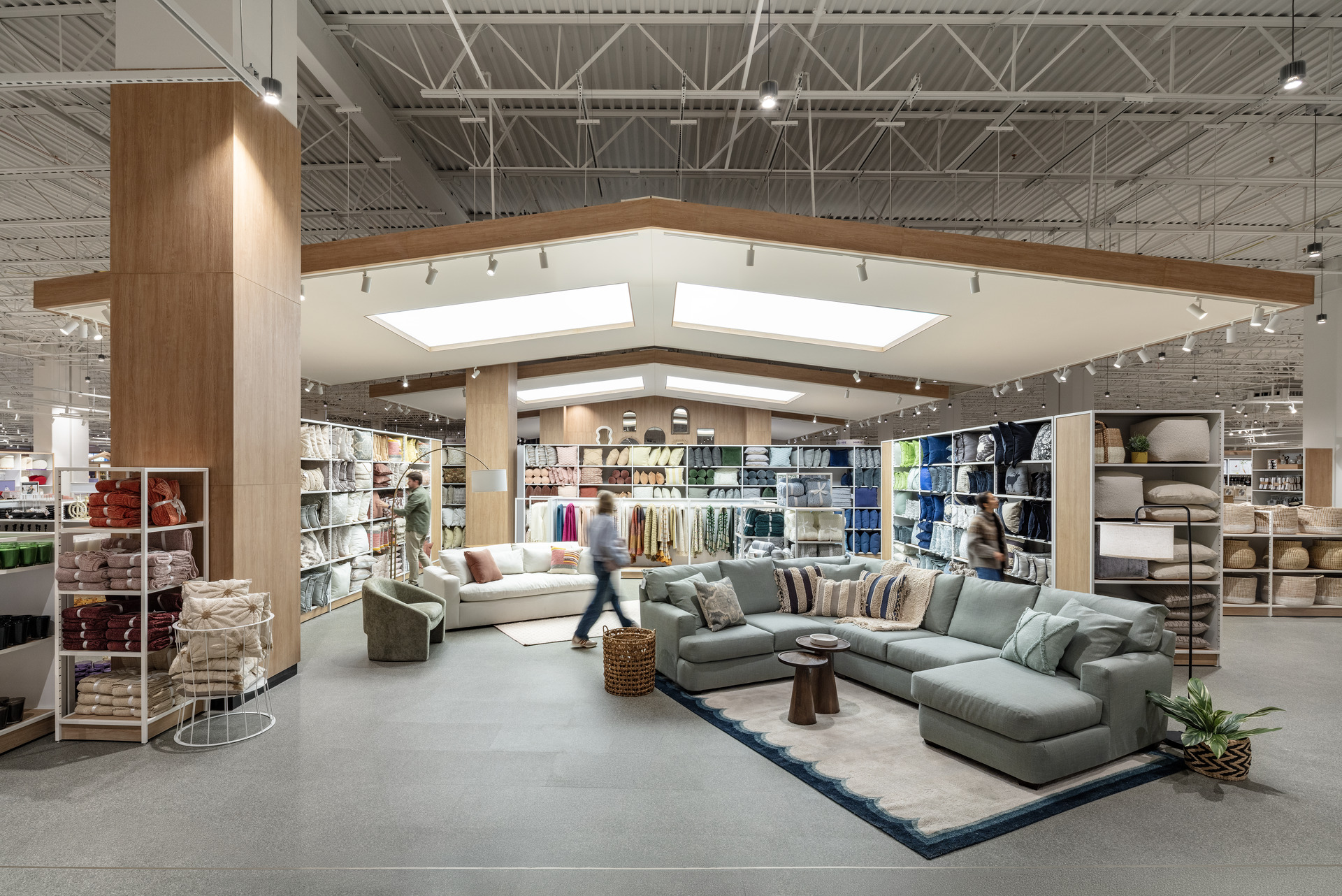
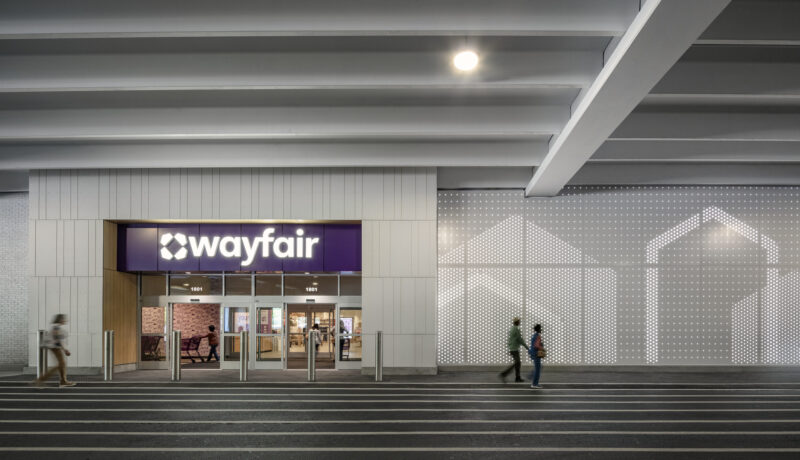
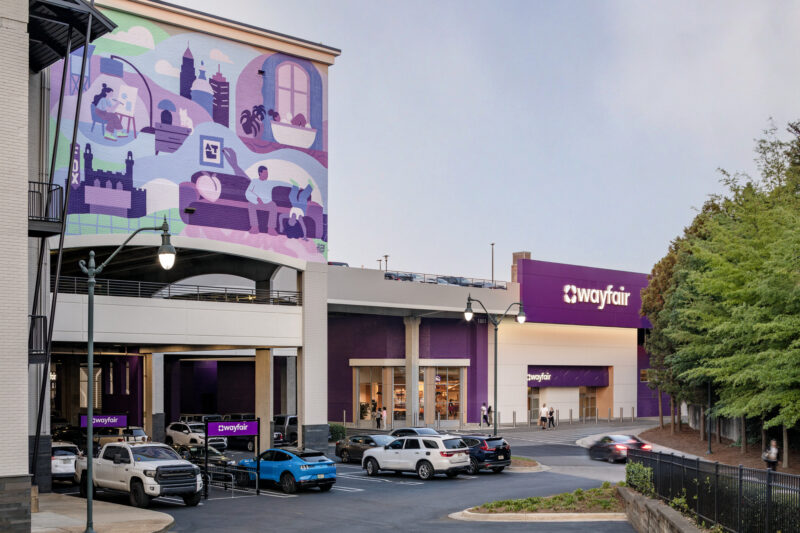
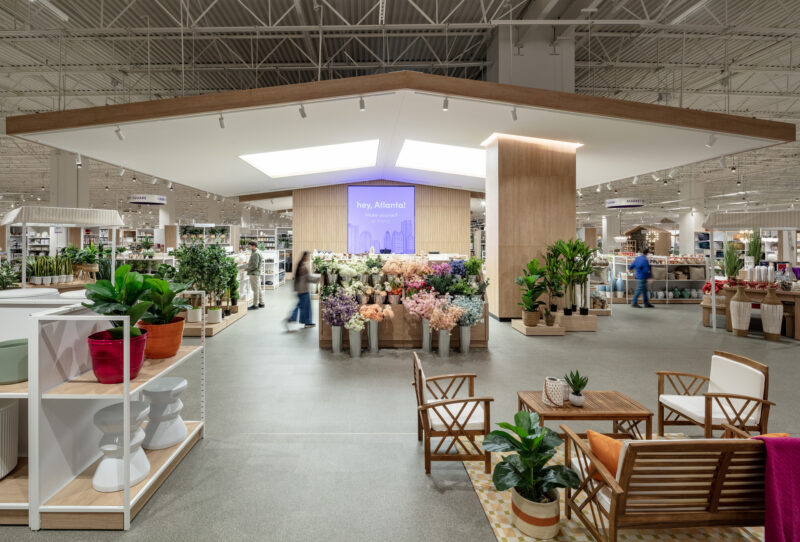
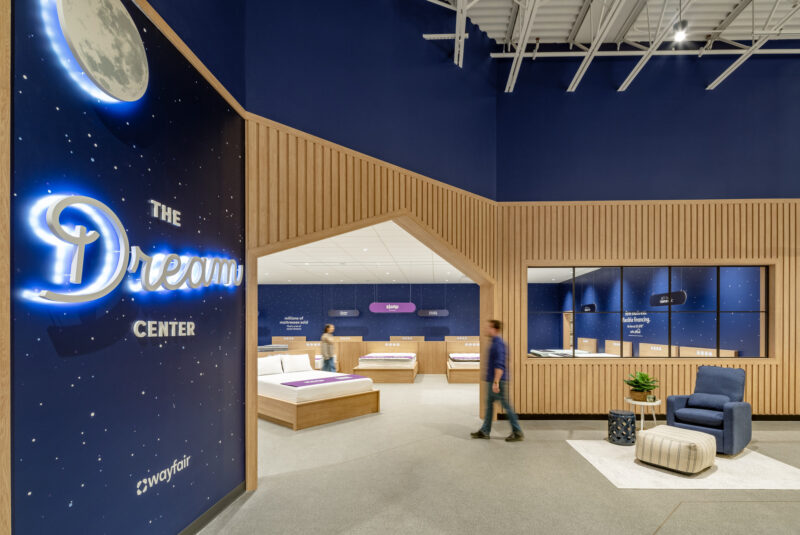
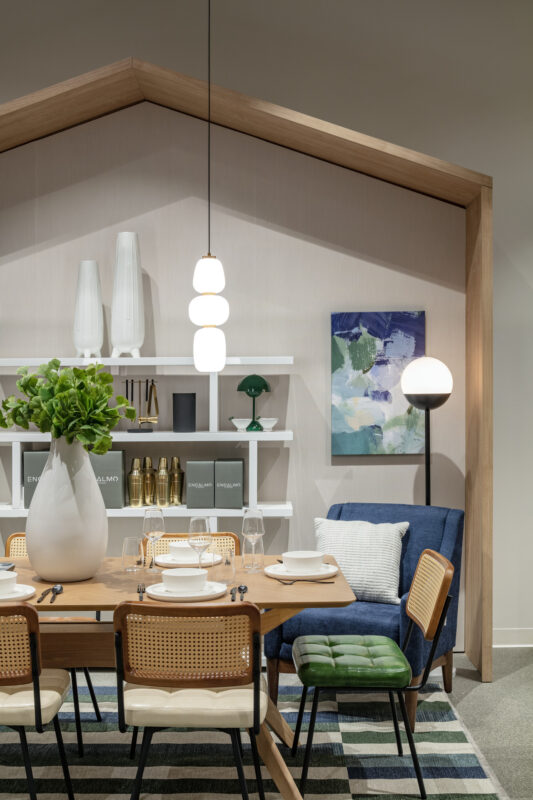
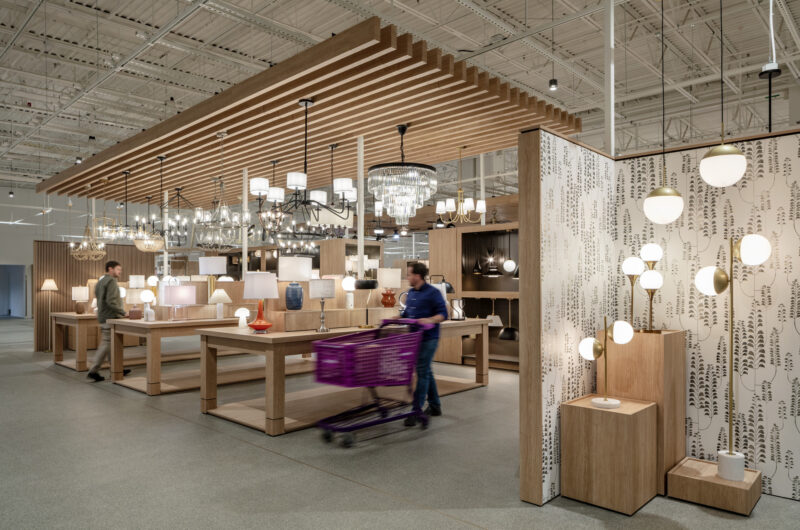
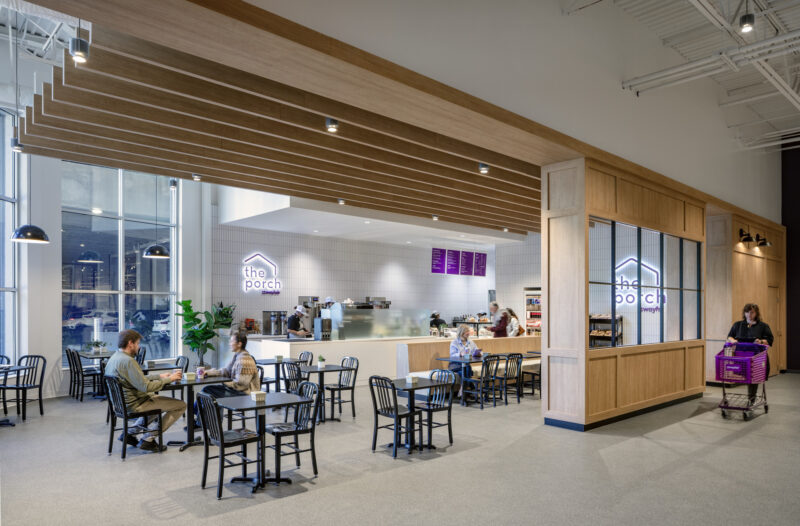
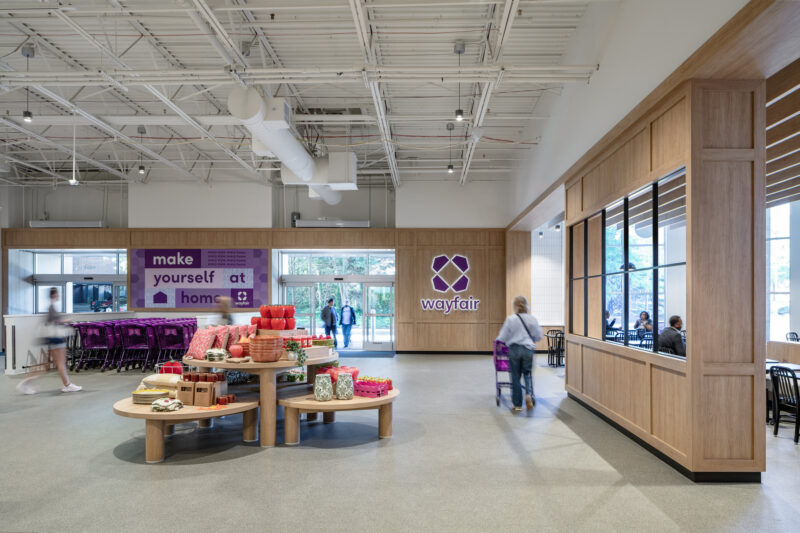
MG2 partnered with Wayfair to develop its newest store in Atlanta, GA, supporting the brand’s strategic expansion into brick-and-mortar retail. The new 150,000 square foot retail destination is located within The District at Howell Mill in Atlanta’s Upper Westside neighborhood. This one-story interior and exterior renovation transforms an existing space with refreshed façades, including two prominent entries. Inside, the design showcases the breadth of Wayfair’s offerings, from furniture and appliances to fixtures, finishes, and home décor, creating an immersive retail environment.

Situated beneath an upper level of parking and retail, the design incorporates additional elements to highlight the store entrances. A full-wall, backlit signage feature reminiscent of a Lite-Brite illuminates the main entry, reinforcing Wayfair’s brand identity and inviting customers inside. A large exterior mural, inspired by the local area, draws shoppers toward the secondary entrance.

Throughout the store, intuitive wayfinding strategies guide customers as they explore the various departments. Landmarks like the central canopy of the Market Square and the oak slat walls of the Dream Center help orient guests and guide them through the space. Vignettes featuring Wayfair’s different design styles serve as smaller landmarks, while hanging trellises in the lighting department provide another visual cue for orientation. The Porch, a food and beverage concept, offers grab-and-go options, comfortable seating, and natural light, providing a welcoming place for customers to recharge.

Wayfair Atlanta marks MG2’s third design project with Wayfair, further strengthening the ongoing partnership. This collaboration focuses on refining the store’s physical identity to better reflect the diverse needs of customers shopping for all things home. The team worked closely with Wayfair to develop the project as a prototype for future stores.


How Gen Alpha is Changing the In-Store Experience

In a recent article, Senior Reporter Katie Hicks of Marketing Brew explores how Gen Alpha is changing the in-store experience.

“Older generations grew up watching many facets of life shift from IRL to online, including shopping. But as younger generations search for places outside of home and school to hang out and watch as creators encourage them to visit stores in person, it’s possible that a reversal could be taking place. A survey from retail consultancy MG2 Advisory recently found that 73% of Gen Alpha prefers good ol’ fashioned brick-and-mortar shopping to buying online.”

NEXCOM, the Navy’s Retail Business, Plans For the Next Generation of Shoppers

In a recent report by Gabrielle Fonrouge of CNBC, MG2 Principal Melissa Gonzalez discusses her and the team’s work helping Navy Exchange Service Command (Nexcom) reimagine its retail strategy as part of a broader turnaround effort.

NEXCOM, the Navy’s Retail Business, Plans For the Next Generation of Shoppers

In a recent article from CNBC, MG2 Principal Melissa Gonzalez shares insights on her and the team’s work supporting Navy Exchange Service Command (Nexcom) in rethinking its retail strategy as part of a larger transformation effort.

“Working alongside Nexcom, Gonzalez has gone department by department, figuring out how to reformat stores, jazz up signage and communicate value based on the local demographics and respective categories.”

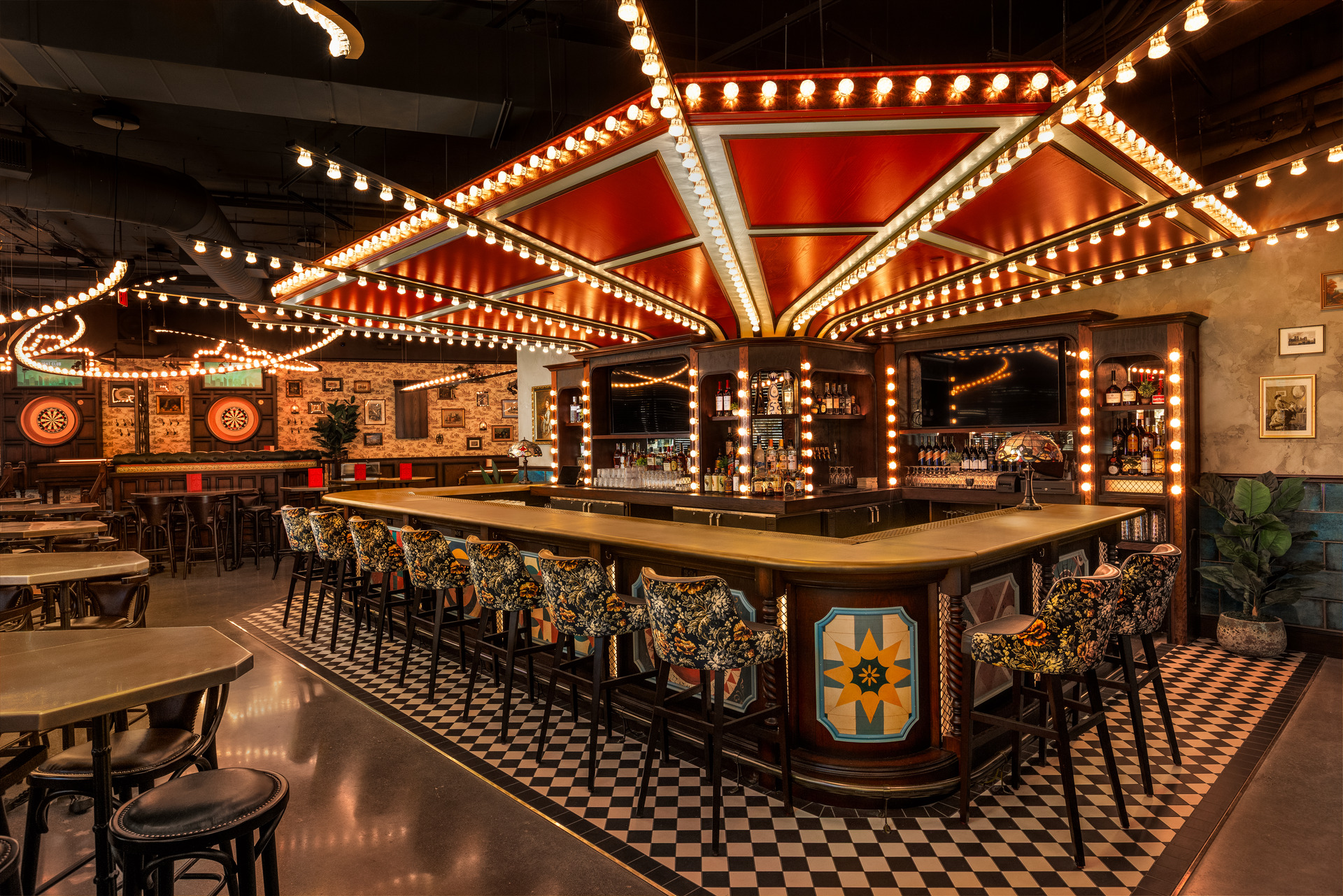
Darts ‘Eatertainment’ Venue Opens in SLU

Flight Club is an upscale, technology-enabled Social Darts concept that delivers a premium experience blending elevated food and drink with an innovative take on the classic game. MG2 connected with Seattle Daily Journal of Commerce Editor Emma Lapworth to learn about our latest project location in the South Lake Union neighborhood of Seattle.

“’Hospitality today is about creating memorable experiences, and this project was an opportunity to collaborate in the design of a space that truly brings people together,’ Nick Caputo, MG2 principal shared in a press release. ‘Working closely with the State of Play team, we focused on crafting an environment that balances atmosphere, functionality, and a strong sense of place.’”

VMSD Announces its 2026 Designer Dozen

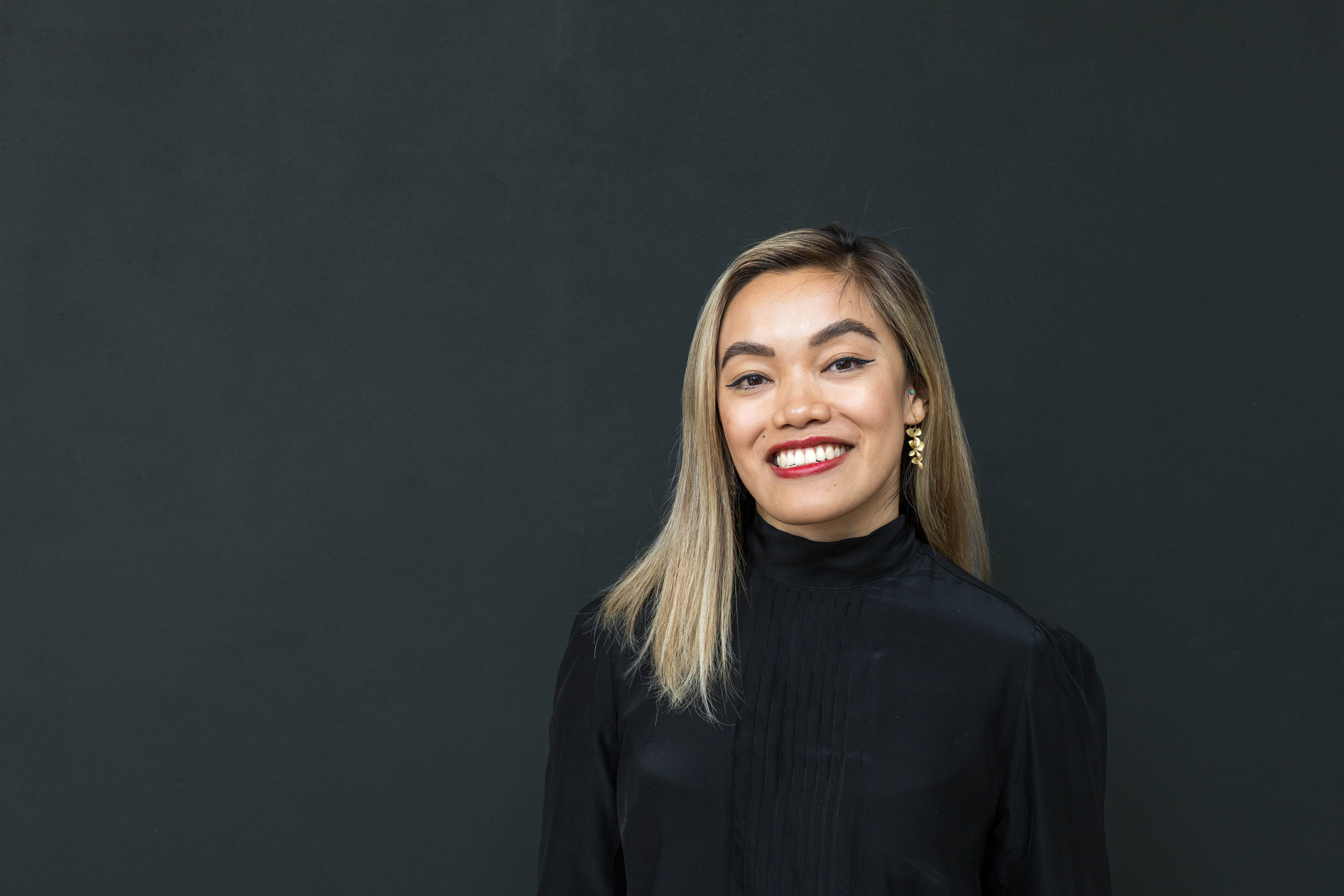
VMSD recently announced its 2026 Designer Dozen Awards. Maria Barrios, MG2 Architectural & Interior Designer, made the list!

Maria shared “From a very young age, I was immersed in the fine and performing arts (painting, dance and drawing) which later evolved into formal studies in graphic design, interior design and architecture. Retail design felt like the perfect intersection of all those disciplines. It combines storytelling, branding, spatial awareness and human psychology. I was especially drawn to how global retail brands can connect with people across cultures through physical space. Retail allows me to design environments that are not only functional, but emotional and experiential.”